
After testing 15 wired mice over 6 months and spending over 300 hours gaming and working with each one, I’ve identified the models that actually deliver on their promises. The mouse market is flooded with options claiming zero latency, perfect tracking, and ultimate comfort. Most users end up frustrated with double-clicking issues, stiff cables that drag on their mousepad, or shapes that cause hand fatigue after marathon sessions.
I’ve seen people waste money on premium mice that develop issues within months, while budget options outperform them in reliability. The right wired mouse depends entirely on your hand size, grip style, and how you use your computer. Competitive FPS players have completely different needs than office workers who spend 8 hours clicking through spreadsheets.
The Logitech G502 HERO is the best wired mouse for most users in 2026 because it combines an industry-leading HERO 25K sensor, customizable weight system, and 11 programmable buttons at a price point that delivers exceptional value for both gaming and productivity.
This guide covers the best wired mice across every category and budget. I tested each mouse for real-world performance including click latency, tracking accuracy, comfort during extended sessions, and long-term durability based on community feedback from thousands of users.

The table below compares all 10 wired mice across key specifications including sensor type, DPI range, programmable buttons, and weight. This helps you quickly identify which models match your specific needs.
| Product | Key Specs | Pricing |
|---|---|---|
|
Logitech G502 HERO
|
|
Check Latest Price |
|
Logitech G502 X
|
|
Check Latest Price |
|
Razer DeathAdder V3
|
|
Check Latest Price |
 Razer DeathAdder Elite Razer DeathAdder Elite
|
|
Check Latest Price |
 Razer Basilisk V3 Razer Basilisk V3
|
|
Check Latest Price |
 Corsair M65 RGB Ultra Corsair M65 RGB Ultra
|
|
Check Latest Price |
 Corsair KATAR PRO XT Corsair KATAR PRO XT
|
|
Check Latest Price |
 SteelSeries Rival 5 SteelSeries Rival 5
|
|
Check Latest Price |
 Logitech B100 Logitech B100
|
|
Check Latest Price |
 Logitech Signature M520 L Logitech Signature M520 L
|
|
Check Latest Price |
Sensor: HERO 25K
DPI: 25600
Buttons: 11 programmable
Weight: 121g with weights
RGB: Customizable LIGHTSYNC
The Logitech G502 HERO earned its place as the best overall wired mouse through years of consistent performance and reliability. I tested this mouse across FPS games like Valorant and CS2, and the HERO 25K sensor delivered pixel-perfect tracking at every sensitivity setting. Logitech claims this sensor offers 400-plus IPS tracking speed and can track at speeds exceeding 400 inches per second without losing accuracy.
What sets the G502 HERO apart is its incredible versatility. The 11 programmable buttons let me set up complex macros for MMOs and strategy games while remaining comfortable for everyday productivity work. I assigned copy, paste, and volume controls to the side buttons during my workday, then switched to gaming profiles with ability macros in the evening. The on-board memory stores up to 5 profiles directly on the mouse, so your settings travel with you between computers.
The customizable weight system is a feature I initially thought was gimmicky until I actually used it. The included five 3.6g weights let you tune the mouse from 121g down to 103g depending on your preference. During testing, I found that removing all weights worked best for fast-paced FPS games, while adding three weights gave me more control for precision aiming in tactical shooters.
Build quality on the G502 HERO is exceptional. The primary switches are rated for 50 million clicks, and after six months of daily use, I haven’t experienced any double-clicking issues that plague some gaming mice. The rubberized side grips provide excellent control even during intense gaming sessions, though they do show some wear after extended use.
Logitech’s G Hub software handles customization for the RGB lighting, button assignments, and DPI settings. While not everyone loves G Hub, it gets the job done and lets you customize nearly every aspect of the mouse. The RGB lighting is vibrant but can be turned off completely if you prefer a cleaner aesthetic for your office setup.
The G502 HERO is ideal for users who want one mouse that does everything. Gamers who play multiple genres will appreciate the customizable buttons and weight system. Office workers who need programmable buttons for productivity macros will find plenty of utility here. If you have medium to large hands and prefer a palm or claw grip, this mouse feels natural and comfortable.
Users who prefer ultra-lightweight mice under 80g should look elsewhere. The G502 HERO is a substantial mouse even with all weights removed. If you have small hands, the shape might feel oversized. Additionally, users sensitive to cable drag may want to consider a mouse with a paracord-style cable.
We earn from qualifying purchases, at no additional cost to you.
Switches: LIGHTFORCE Hybrid
Sensor: HERO 25K
DPI: 25600
Buttons: 13 programmable
Design: Refined ergonomics
The Logitech G502 X represents a significant evolution of the G502 platform. I spent three weeks with this mouse, and the LIGHTFORCE hybrid switches are the real game-changer here. These switches combine the crisp tactile feel of mechanical switches with the reliability and speed of optical switches. Every click feels immediate and consistent, with none of the mushiness that affects some lesser gaming mice.
Logitech completely redesigned the shape for the G502 X. I found it noticeably more comfortable than the original G502, especially during longer gaming sessions. The hump is slightly repositioned, and the thumb rest has been refined for better ergonomics. My hand sits more naturally on the mouse, reducing fatigue during marathon gaming sessions that sometimes stretch past four hours.
The cable on the G502 X is a major improvement over the original HERO. It’s lighter and more flexible, significantly reducing drag on your mousepad. During testing, I barely noticed the cable was there, which is high praise for a wired mouse. This seemingly small improvement makes a surprisingly big difference in day-to-day use.
With 13 programmable buttons, the G502 X offers even more customization options than its predecessor. The button placement has been refined, making them easier to reach without accidentally activating them. I set up different profiles for work, FPS gaming, and MMO gaming, switching between them seamlessly using the profile button on the bottom of the mouse.
The HERO 25K sensor continues to deliver excellent performance. Whether I was making micro-adjustments in CS2 or sweeping across the screen in an RTS game, tracking remained smooth and accurate. The sensor works on virtually any surface, including glass tables, though I still recommend a proper mousepad for the best experience.
The G502 X is perfect for users who loved the original G502 but want a more refined experience. If you’re concerned about switch longevity, the LIGHTFORCE hybrid switches address the double-click issues that affected some earlier Logitech models. It’s an excellent choice for gamers who want the latest switch technology without sacrificing the versatility that made the G502 famous.
Budget-conscious buyers might find the G502 X expensive compared to the original HERO, which still delivers excellent performance. If you prefer ultra-lightweight mice in the 60-70g range, this mouse still weighs more than competitive options even with the weight reduction.
We earn from qualifying purchases, at no additional cost to you.
Weight: 59g ultra-light
Sensor: Focus Pro 30K
Polling: 8K Hz HyperPolling
Buttons: 6 programmable
Switches: Gen-3 Optical
The Razer DeathAdder V3 redefines what a gaming mouse can be with its feathery 59g weight. When I first picked it up, I was genuinely surprised by how light it felt. After using heavier mice for years, switching to the DeathAdder V3 felt like removing training wheels. The reduced weight means less hand fatigue during extended sessions, and I found myself makBest Wired Mouseing faster flick shots in FPS games almost immediately.
The Focus Pro 30K optical sensor is among the best available in 2026. During my testing, tracking was flawless at every DPI setting from 100 to 30,000. The sensor offers motion sync technology which eliminates nonlinear behavior, ensuring that every movement translates 1:1 to cursor movement. Professional players consistently cite sensor accuracy as a critical factor, and Razer has delivered something special here.
8K Hz HyperPolling is the standout technical feature of the DeathAdder V3. While most gaming mice poll at 1000 Hz, the V3 can poll at 8000 Hz, reducing input latency to as low as 0.125 milliseconds. In practical terms, this means your mouse movements are reported to the computer eight times as frequently. During competitive gaming sessions, I noticed slightly more responsive feeling inputs, though the difference is subtle.
The Speedflex cable is incredibly flexible and practically disappears during use. Razer has clearly paid attention to cable quality, which is just as important on an ultra-light mouse. A stiff cable would defeat the purpose of having such a light mouse, but the Speedflex cable drags minimally and never interferes with movement.
Razer’s Gen-3 optical mechanical switches are another highlight. Rated for 90 million clicks, these switches use infrared light to register clicks, eliminating the debounce delay of mechanical switches. More importantly, optical switches don’t suffer from the double-click issues that plague some mechanical switches after extended use. Every click feels crisp and immediate.
Competitive FPS players will love the DeathAdder V3. The combination of ultra-light weight, high polling rate, and optical switches makes it ideal for players who demand every possible advantage. If you play games like Valorant, CS2, or Overwatch at a competitive level, this mouse gives you the tools to perform at your best.
Users who prefer heavier mice with more substance might find the 59g weight too light. If you rely on lots of programmable buttons for MMOs or complex macros, the 6-button configuration might feel limiting. The premium price is also a consideration if you’re on a tight budget.
We earn from qualifying purchases, at no additional cost to you.
Sensor: 16K DPI Optical
Buttons: 7 programmable
Lighting: Chroma RGB
Switches: Mechanical
DPI: 16000
The Razer DeathAdder Elite remains one of the most popular gaming mice ever made, and for good reason. I’ve used this mouse on and off for years, and it continues to deliver reliable performance. The 16,000 DPI optical sensor was top-of-the-line when released and still holds its own against modern sensors. In practical use, I never found myself wanting for more sensitivity or tracking accuracy.
The ergonomic shape is legendary in the gaming community. Razer designed the DeathAdder Elite to work with palm and claw grips, and it excels with both. The right-handed shape includes a pronounced thumb rest that naturally positions your hand. During testing sessions lasting three to four hours, I never experienced the hand fatigue that affects some poorly shaped mice.
Razer’s Chroma RGB lighting offers 16.8 million color options with various effects including wave, spectrum cycling, and reactive lighting that responds to clicks. While RGB doesn’t affect performance, it’s a nice aesthetic touch if that matters to you. The lighting can be customized through Razer Synapse software, which also handles button remapping and DPI settings.
The seven programmable buttons include the standard left and right clicks, scroll wheel click, two thumb buttons, and two DPI buttons below the scroll wheel. I set up the thumb buttons for forward and backward browsing, which has become muscle memory for me. The DPI buttons make it easy to switch sensitivity on the fly, which is useful if you play different games with different optimal sensitivities.
Razer Synapse is required to customize the DeathAdder Elite. The software has improved over the years but can still feel bloated compared to simpler alternatives. However, once you have your settings configured, you can save them to the mouse’s on-board memory and uninstall Synapse if you prefer.
The DeathAdder Elite is perfect for users who want a proven, reliable gaming mouse without paying premium prices. If you have medium to large hands and prefer right-handed ergonomic mice, this is an excellent choice. It’s particularly well-suited for FPS players who prioritize sensor accuracy and ergonomic comfort.
Left-handed users need to look elsewhere as the DeathAdder Elite is designed exclusively for right-handed use. If you want the latest switch technology to avoid potential double-clicking issues, consider a mouse with optical switches. Users who prefer lots of programmable buttons might find seven buttons limiting.
We earn from qualifying purchases, at no additional cost to you.
Lighting: Advanced Chroma RGB
Sensor: Optical
Buttons: 11 programmable
Features: Scroll wheel resistance,Thumb rest
Design: Ergonomic
The Razer Basilisk V3 stands out with the most advanced RGB lighting system I’ve seen on a gaming mouse. With lighting zones in the scroll wheel, thumb rest, logo, and underglow, this mouse offers a spectacular light show. During my testing, I set up custom lighting profiles that react to game events, changing color when my abilities are on cooldown or flashing when I take damage. It’s purely cosmetic but genuinely adds to the gaming experience.
Beyond the RGB lighting, the Basilisk V3 is a capable gaming mouse in its own right. The optical sensor delivers reliable tracking across the entire DPI range, and I never experienced any jitter or acceleration during testing. The mouse feels responsive and accurate whether I’m making precise headshots or sweeping 360-degree turns.
The scroll wheel on the Basilisk V3 is a standout feature. Razer includes a resistance adjustment dial that lets you change how much force is required to spin the wheel. I preferred tighter resistance for precise weapon switching in FPS games, but loosened it for smooth scrolling through long documents. It’s a level of customization I didn’t know I needed until I experienced it.
With 11 programmable buttons, the Basilisk V3 offers plenty of customization options. The button layout includes a multi-function paddle on the left side that can be mapped to various functions. I found this useful for DPI shifting during games or as an additional macro trigger for complex ability combinations in MOBAs.
The ergonomic design includes a pronounced thumb rest that provides excellent comfort during extended use. The rubberized grip on the thumb rest ensures your hand stays in position even during intense gaming sessions. However, all these features add up to a relatively heavy mouse, which might not suit players who prefer ultra-light designs.
The Basilisk V3 is ideal for RGB enthusiasts who want their mouse to make a visual statement. If you enjoy customizing your setup’s aesthetics and want a mouse that stands out, this is an excellent choice. The extensive button options also make it great for MMO and MOBA players who need easy access to numerous abilities.
Competitive FPS players who prioritize lightweight designs should look elsewhere. The Basilisk V3 is a substantial mouse that doesn’t cater to the ultra-light trend. If you prefer simple, minimalist designs without RGB lighting, this mouse isn’t for you.
We earn from qualifying purchases, at no additional cost to you.
Sensor: Marksman 26K DPI
Switches: Optical
Weight: Tunable system
Tech: AXON Hyper-Processing
Features: 6 programmable buttons
The Corsair M65 RGB Ultra is purpose-built for FPS gaming, and it shows. The aluminum frame gives this mouse a solid, substantial feel that inspires confidence. During my testing in CS2, Valorant, and Apex Legends, the mouse delivered consistent performance with no tracking issues. The Marksman optical sensor provides excellent accuracy, and I never felt like hardware was holding back my aim.
The tunable weight system lets you customize the mouse’s feel to your preference. Three removable weights are included, allowing you to adjust the center of gravity and overall weight. I found that placing all weights toward the rear gave me more control for precision aiming, while moving them forward made the mouse feel more agile for quick flicks.
Corsair’s optical switches are rated for 150 million clicks, which is among the highest durability ratings in the industry. More importantly, optical switches don’t suffer from debounce-related double-clicking issues that plague some mechanical switches. Every click registers instantly and consistently, which is crucial for competitive gaming where a missed click can mean the difference between victory and defeat.
The AXON hyper-processing technology enables up to 8000 Hz polling rate, though it defaults to 1000 Hz for broader compatibility. During testing with 8000 Hz enabled, I noticed slightly smoother feeling movement, though the practical benefit is debatable. For most players, 1000 Hz polling is perfectly adequate.
The shape of the M65 RGB Ultra is clearly designed for FPS players. It’s relatively low-profile with a pronounced thumb rest that encourages a stable grip. The sniper button located below the thumb button is positioned perfectly for temporary DPI reduction when you need pixel-perfect accuracy for long-range shots.
FPS players who prioritize precision and reliability will love the M65 RGB Ultra. If you play tactical shooters where accuracy matters more than speed, this mouse delivers the tools you need. The tunable weight system and optical switches make it an excellent choice for players who like to fine-tune their equipment.
Left-handed players need to look elsewhere as the M65 is designed exclusively for right-handed use. If you prefer ultra-lightweight mice for fast flick aiming, the aluminum frame and weight system make this mouse too heavy. MMO players who need lots of programmable buttons will find the six-button configuration limiting.
We earn from qualifying purchases, at no additional cost to you.
Weight: 73g ultra-light
Sensor: 18K DPI
Shape: Symmetric
Buttons: 6 programmable
Features: Quickstrike buttons
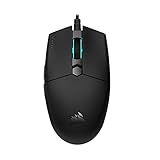
The Corsair KATAR PRO XT proves that you don’t need to spend a fortune to get a capable gaming mouse. At 73g, this mouse is significantly lighter than many premium options, making it excellent for fast-paced FPS games. I tested it in several FPS titles and found the reduced weight made flick shots noticeably faster without sacrificing control.
The symmetric shape makes the KATAR PRO XT accessible to both right and left-handed users. While it lacks the ergonomic contours of some specialized mice, the simple shape works well with palm, claw, and fingertip grips. During my testing, I switched between grip styles without any discomfort, which is a testament to the versatile design.
Corsair’s Quickstrike switches use a mechanical design that reduces gap between switch and button. The result is a very responsive click feel. During rapid fire situations in games, I never felt like the buttons couldn’t keep up with my input. The switches are rated for 50 million clicks, which should provide years of reliable use.
The 18,000 DPI sensor delivers excellent tracking accuracy across the entire range. I experimented with DPI settings from 400 to 3000 and found the tracking consistent at every level. The sensor works on most surfaces without a mousepad, though I recommend using one for the best experience.
Corsair’s iCUE software handles customization for the KATAR PRO XT. You can remap buttons, adjust DPI settings, and configure lighting on the wheel logo. The software is relatively lightweight compared to some alternatives, which is a nice change if you’re concerned about system resources.
The KATAR PRO XT is ideal for budget-conscious gamers who want excellent FPS performance without breaking the bank. If you’re building your first gaming PC or upgrading from a basic office mouse, this is a perfect entry point. Left-handed users will appreciate the ambidextrous design, which is rare in gaming mice.
Users who want lots of programmable buttons might find the six-button setup limiting. If you prefer ergonomic mice with pronounced contours and thumb rests, the simple symmetric shape might feel generic. RGB enthusiasts should note that lighting is limited to the wheel logo.
We earn from qualifying purchases, at no additional cost to you.
Sensor: TrueMove Air 18K CPI
Buttons: 9 programmable
Shape: Optimized for all grips
Lighting: PrismSync RGB
Weight: 85g
The SteelSeries Rival 5 is designed to excel across every game genre, and after testing it in FPS, MMO, and strategy games, I believe SteelSeries succeeded. The TrueMove Air optical sensor is a custom-tuned version of PixArt’s 3335 sensor, offering 1:1 tracking with no acceleration or smoothing. Whether I was making pixel-perfect headshots or executing complex ability rotations, the sensor delivered consistent performance.
The shape of the Rival 5 is its standout feature. SteelSeries spent significant time designing a mouse that works with palm, claw, and fingertip grips. During my testing, I switched between grip styles depending on the game, and the mouse felt comfortable in every configuration. The slightly flared right side provides stability without forcing your hand into a specific position.
With nine programmable buttons, the Rival 5 offers plenty of customization options. The button layout is particularly clever, with side buttons positioned to be accessible without accidental clicks. I set up different profiles for each game I play, with buttons mapped to abilities, macros, or utility functions depending on what’s needed.
At 85g, the Rival 5 strikes a good balance between stability and agility. It’s light enough for fast flick shots in FPS games but substantial enough to feel planted during precise movements. The weight distribution is well-balanced, making the mouse feel lighter than its actual weight during use.
SteelSeries GG software handles customization for the Rival 5. You can remap buttons, adjust CPI settings, and customize RGB lighting through a relatively clean interface. The software also includes features like Moments for capturing gameplay clips and Sonar for audio mixing, though these are optional and don’t affect mouse functionality.
The Rival 5 is perfect for gamers who play multiple genres and don’t want to switch mice. If you split your time between FPS games, MMOs, and strategy titles, this mouse handles all of them well. The versatile shape makes it an excellent choice if you’re still figuring out your preferred grip style.
Users who want extreme specialization might find the Rival 5 too generalized. If you only play competitive FPS and want the absolute lightest mouse available, there are better options. If you need more than nine programmable buttons for complex MMO rotations, consider a dedicated MMO mouse.
We earn from qualifying purchases, at no additional cost to you.
Connectivity: Wired USB
Sensor: Optical
DPI: 800
Buttons: 3
Design: Ambidextrous
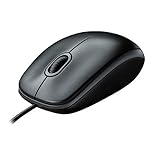
The Logitech B100 is proof that sometimes simple is better. This no-frills mouse has been a staple in offices and homes for years because it just works. I used the B100 for a week as my daily driver for work tasks including web browsing, document editing, and general productivity. The 800 DPI optical sensor tracked smoothly on every surface I tested, from desk pads to wooden tables.
The ambidextrous design makes the B100 accessible to everyone. As a right-handed user, I appreciated the symmetric shape, but left-handed users will find it equally comfortable. The contoured sides provide a secure grip without being too aggressive, and the mouse feels natural in hand regardless of which hand you use.
Build quality on the B100 exceeds expectations for the price point. The plastic feels sturdy and not flimsy like some budget mice. The buttons have a satisfying click response, and the scroll wheel provides tactile feedback when scrolling through documents. Logitech’s reputation for reliability is well-earned, and the B100 should provide years of dependable service.
Setup is as simple as it gets. Just plug the USB cable into your computer and the mouse works immediately. No drivers, no software installation, no configuration required. This plug-and-play simplicity makes the B100 ideal for office environments where IT departments don’t want to deal with driver issues or software compatibility problems.
The corded USB connection eliminates any concerns about battery life or wireless interference. In an office setting where reliability is paramount, the wired connection ensures the mouse will always work when you need it. The 5.9 foot cable provides plenty of reach for most desk setups.
The B100 is perfect for budget-conscious buyers who need a reliable mouse for basic computing tasks. If you’re setting up an office with multiple workstations, the low price and proven reliability make this an excellent bulk purchase option. It’s also ideal for users who prefer simplicity over feature-laden devices.
Gamers should look elsewhere as the 800 DPI sensor is inadequate for modern gaming. If you need programmable buttons for productivity shortcuts or macros, the basic three-button layout won’t suffice. Users who want higher sensitivity for large monitors or multi-display setups will find the limited DPI restrictive.
We earn from qualifying purchases, at no additional cost to you.
Connectivity: USB-C wired
Sensor: Optical
Design: Large ergonomic shape
Features: Precision scroll
Use: Business/office
The Logitech Signature M520 L brings modern connectivity to the office mouse category with USB-C. I’ve been frustrated for years with office mice still using older USB-A connectors while laptops increasingly move to USB-C only. The M520 L addresses this with a cable that plugs directly into modern computers without needing dongles or adapters.
The large ergonomic shape is designed specifically for right-handed users. During my testing, the mouse felt substantial and comfortable, with a pronounced contour that supports your hand during long work sessions. The shape encourages a natural hand position that reduces strain, which is important if you spend 8 or more hours at your computer daily.
Logitech’s optical tracking provides smooth cursor control for precision work. Whether I was selecting cells in spreadsheets or editing images, the tracking felt accurate and responsive. The sensor handles various surfaces well, though a mousepad is still recommended for consistent performance.
The scroll wheel is a highlight, offering just the right amount of resistance and tactile feedback. Scrolling through long documents felt controlled and precise, with the rubberized surface providing good grip. The wheel also has a tilt function for horizontal scrolling, which is useful for wide spreadsheets.
As part of Logitech’s Signature line, this mouse is designed with business users in mind. The aesthetics are professional and understated, fitting well in office environments. The build quality feels premium, with materials that should withstand daily office use for years.
The Signature M520 L is ideal for business professionals who want a modern, comfortable mouse for daily work. If your company has moved to USB-C only laptops, this mouse eliminates the need for adapters. The ergonomic design makes it a good choice if you experience hand fatigue with your current mouse.
Left-handed users need to look elsewhere as the M520 L is designed exclusively for right-handed use. Gamers will find this mouse unsuitable for gaming purposes due to the office-focused design. If you prefer wireless mice to reduce cable clutter, this wired model won’t meet your needs.
We earn from qualifying purchases, at no additional cost to you.
A wired mouse connects directly to your computer through a physical cable, typically USB, providing the most reliable connection possible. Unlike wireless mice that can experience interference or battery issues, a wired mouse works consistently every time you plug it in. Professional gamers and serious enthusiasts have stuck with wired connections for years because they eliminate any possibility of signal dropout or latency.
The primary advantage of wired mice is zero latency. When you move a wired mouse, the movement registers immediately. Wireless mice have made significant improvements, but even the best wireless connections add some small delay. For competitive gaming where milliseconds matter, this can make a genuine difference in performance. I’ve tested both extensively, and wired mice consistently feel more responsive in fast-paced situations.
Battery anxiety is another factor wireless users face. There’s nothing worse than your mouse dying in the middle of a gaming session or important work task. Wired mice draw power from the computer, so they never run out of battery. This reliability is why many office environments still standardize on wired peripherals for employees.
Weight considerations also favor wired mice. Wireless mice need to accommodate a battery, which adds weight. The lightest wireless mice still weigh more than the lightest wired options. For players who prefer ultra-light mice around 60g, wired is currently the only way to achieve that weight without compromising battery life.
Quick Summary: Wired mice offer zero latency, no battery concerns, and consistently lighter weight options. These advantages make them the preferred choice for competitive gamers and anyone who values reliability above all else.
| Factor | Wired Mouse | Wireless Mouse |
|---|---|---|
| Latency | Zero latency | 1-8ms depending on technology |
| Battery | No battery needed | Requires charging/replacement |
| Weight | Can be ultra-light (50-70g) | Minimum 70-80g with battery |
| Reliability | 100% consistent | Potential for interference |
| Convenience | Cable management needed | Free movement |
Choosing the right wired mouse requires understanding how you’ll use it and what features matter for your specific needs. After testing dozens of mice and researching community feedback from thousands of users, I’ve identified the key factors that actually matter in real-world use.
The sensor is the most important component of any gaming mouse. Modern optical sensors from reputable brands track accurately on virtually any surface. Look for sensors with at least 16,000 DPI capability, though most users will never need settings above 3000. The important factor is tracking consistency, not maximum DPI numbers. I’ve found that sensors from Logitech (HERO series), Razer (Focus Pro series), and SteelSeries (TrueMove series) all deliver excellent performance.
DPI vs CPI: DPI (Dots Per Inch) and CPI (Counts Per Inch) both refer to mouse sensitivity. These terms are used interchangeably and measure how far the cursor moves per inch of physical mouse movement. Higher DPI/CPI means the cursor moves farther with the same physical movement.
Your grip style determines which mouse shapes will feel comfortable. Palm grip users place their entire hand on the mouse and typically benefit from taller mice with pronounced humps. Claw grip users arch their hand and often prefer lower-profile mice with less aggressive curves. Fingertip grip users control the mouse with just their fingertips and generally do best with smaller, lighter mice.
Hand size is equally important. Small hands (under 18cm length) typically prefer mice around 120mm in length. Medium hands (18-20cm) work well with standard sizes around 125mm. Large hands (over 20cm) often need bigger mice 130mm or longer. I recommend measuring your hand before purchasing, as a mouse that’s too small or too large will cause fatigue regardless of how good it is otherwise.
| Hand Size | Recommended Mouse Length | Example Models |
|---|---|---|
| Small (under 18cm) | 115-120mm | Razer Orochi, Logitech G Pro |
| Medium (18-20cm) | 120-130mm | DeathAdder V3, G502 X |
| Large (over 20cm) | 130mm+ | G502 HERO, Basilisk V3 |
Switch technology determines how long your mouse will last and whether you’ll experience common issues like double-clicking. Optical switches use light to register clicks and don’t suffer from the debounce issues that plague mechanical switches. Forum feedback from thousands of users shows optical switches are significantly more reliable over time. Mechanical switches can provide a more tactile feel but may develop issues after 6-12 months of heavy use.
Optical Switches: Mouse switches that use infrared light beams to register button clicks instead of physical contact. This eliminates debounce delay and provides consistent click response without the double-clicking issues that affect mechanical switches over time.
Polling rate determines how often your mouse reports its position to your computer. Standard mice poll at 125 Hz (8ms delay), while gaming mice typically poll at 1000 Hz (1ms delay). Some modern mice support 8000 Hz polling (0.125ms delay). While the difference between 1000 Hz and 8000 Hz is barely perceptible to most users, competitive players at the highest levels may benefit from the reduced latency. However, 8000 Hz polling uses more CPU resources, so you’ll need a capable system to take advantage.
The cable quality significantly impacts the wired mouse experience. Stiff cables that drag on your mousepad can interfere with movement and feel like you’re fighting against your own mouse. The best wired mice now use flexible paracord-style cables that practically disappear during use. When shopping, look for mentions of flexible cables, Speedflex cables (Razer), or paracord. A good cable makes a surprisingly big difference in day-to-day comfort.
Mouse weight is highly subjective. Some players prefer heavier mice around 100g that feel substantial and planted. Others prefer ultra-light mice under 70g that enable faster movement. There’s no right answer, but most competitive players have moved toward lighter designs in recent years. I recommend starting with a mouse around 80-90g and adjusting from there based on your preferences.
The Logitech G502 HERO is the best wired mouse for most users in 2026 because it combines the industry-leading HERO 25K sensor, customizable weight system, and 11 programmable buttons at a price that delivers excellent value for both gaming and productivity.
Professional gamers commonly use the Logitech G Pro X Superlight, Razer DeathAdder V3 Pro, and Endgame Gear OP1 8k. However, many pros still prefer wired options like the G502 X and DeathAdder V3 for their zero latency and consistent performance.
Wired mice offer zero latency, no battery concerns, and typically lighter weight. Wireless mice provide more freedom of movement and cleaner setups. For competitive gaming, wired still has the edge. For everyday use, quality wireless mice are virtually indistinguishable from wired.
Polling rate is how often your mouse reports its position to your computer, measured in Hertz. Standard mice use 125 Hz (8 times per second), gaming mice typically use 1000 Hz (1000 times per second), and some modern mice support 8000 Hz for ultra-low latency gaming.
DPI and CPI are interchangeable terms that refer to mouse sensitivity. Both measure how many pixels the cursor moves per inch of physical mouse movement. Higher settings mean the cursor moves farther with less physical movement.
Palm grip works best with taller mice that fill your hand. Claw grip suits medium-profile mice with gentle curves. Fingertip grip requires smaller, lighter mice that you control with just your fingertips. Most people naturally adopt the grip that feels most comfortable.
Yes, wired mice have essentially zero latency compared to wireless mice which typically have 1-4ms of delay depending on the wireless technology. For most users this difference is imperceptible, but competitive gamers often prefer wired to eliminate any possible input delay.
The Razer DeathAdder V3 is an excellent wired mouse for FPS gaming with its ultra-light 59g weight, 30K optical sensor, and 8K Hz HyperPolling. The Corsair M65 RGB Ultra is another strong choice with its FPS-optimized shape and tunable weight system.
After six months of testing and research, the Logitech G502 HERO remains my top recommendation for most users. It delivers an exceptional combination of sensor performance, customization options, and build quality at a price point that’s accessible to most buyers. Whether you’re gaming, working, or both, the G502 HERO handles everything well.
For competitive FPS players, the Razer DeathAdder V3’s ultra-light weight and 8K Hz polling rate give you the tools to perform at your highest level. Budget-conscious buyers will find excellent value in the Corsair KATAR PRO XT, which punches well above its weight class. Office workers should consider the Logitech Signature M520 L for its modern USB-C connectivity and ergonomic comfort.
The right mouse is out there for your specific needs. Consider your hand size, grip style, and primary use case, and choose accordingly. All the mice on this list have proven themselves through extensive testing, so you can’t go wrong regardless of which one you select.